 One of last years greatest surprises was the removal of Hydatellaceae from Poales to Nymphaeales. It might not sound grand, but since Poales is the group of monocots that the grasses, sedges, rushs (and pineapples!) are a part of, and the Nymphaeales are the water lilies, the magnitude of the transfer of this small family of minute, sedge-like aquatics is so more impressing. And even more interesting since the Nymphaeales is one of the prime suspects for the sistership to the rest of the flowering plants! The implication of all this is simply that Hydatellaceae migh be the one of the missing keys needed to solve Darwin’s “abominable mystery“, the grand origin of flowers and flowering plants themselves! When DNA sequences first was used in large scale to resolve evolutionary relationships among plants, the big surprise then was finding the hornwort family, Ceratophyllaceae, at the very base of the Angiosperm tree of life. Soon however, the hornworts lost their isolated position outside all the other Angiosperms, and was replaced by a virtually unknown and thoroughly neglected small shrub from New Caledonia, the now famous Amborella trichopoda. Amborella has since then as best as it can defended its position as sister to the rest of the flowering plants, but what can be ask for from a shrub? From time to time its sistership has been challenged, but no obvious candidate has turned up. One of the challengers have however been Nymphaeales, either alone or together with Amborella, but already small changes in parameters or data sets have restored Amborella as the sole sister. And we are still waiting for the definitive analysis that will show us with high confidence what the basal relationships are. In the meantime, we need to see what the traditional data sets can tell us about the evolution. One possible large step forward was presented in the last issue of Nature, in the paper “Hydatellaceae are water lilies with gymnospermous tendencies” by William Friedman of University of Colorado (Nature 1 May 2008, vol. 453: 94-97). Here Friedman describe the embryology of the female gametophyte (the structure harboring the egg cells and, after fertilization, forms the seed). Not surprisingly, now when we are pretty certain that Hydatellaceae are “water lilies” (albeit seemingly sedgy ones), much of the embryological features correspond to the other water lilies (the female gametophyte of the water lilies and the likewise early-branching Austrobaileyales have a development not found in most other angiosperms, including Amborella), but Hydatellaceae have an additional feature unique among flowering plants: the allocation of nutrients (starch) to the embryo-nourishing tissue prior to the fertilization! All other flowering plants allocate nutrients first after the fertilization, thus avoiding “wasting” valuable nutrients on unfertilized seeds, but the gymnosperms (conifers and allies) don’t. They allocate nutrients before the embryo is formed, and interestingly this is also the case in Hydatellaceae! What the implications of this finding are is not apparent yet, but one obvious possibility is that this is the plesiomorphic (primitive or original) condition among the flowering plants, later changed (lost) in all other flowering plants with the evolution of second fertilization (trigging the onset of the formation of the nutrition tissue), including Amborella, but still present in Hydatellaceae. And the easiest explanation for this pattern is that Nymphaeales is the sister to the rest of the flowering plants, with two “independent” origins of the second fertilization (one on the branch with the other members of the water lilies, one on the branch with all other flowering plants including Amborella). With Amborella as sister to the rest, three “independent” origins are needed, or we need to interpret the pre-fertilization nutrition tissue in Hydatellaceae as a truely unique feature, not really the same as in the gymnosperms (there are differences) but instead evolved from an ancestor with second fertilization, something that is not easily explained. The next logic step from here will be to describe and characterize the genetic system behind this feature, and compare it with the other early branching angiosperms as well as the gymnosperms. The evo-devo people are probably already working hard with it!
|
|||||
|
For those of you reading Polish, there is a short report on the STJ homepage, written by Karolina, on last summers exploration in Burfjellet. I’m not sure what it says though… For those of you who, like me, don’t read Polish, but still want to now what we did last summer during our (almost) two week at Burfjellet, I have written two small texts (one in Swedish, one in English). Oh, almost forgot, this years mountain camp will take place at Burfjellet August 2 to 9! More information on thit great event can soon be found on the web pages of Norsk grotteforbund and Sveriges speleologförbund!
This video from speleologas has everything you want from a music video! The lone man, smoking his waterpipe, heartbroken and teared by his miserable love to two women, a betrayed love, but also a happy end symbolized by wood chopping. But all this would only have been your average, we-have-seen-it-before-love-story, if it wasn’t for the setting! See it, listen to it, enjoy it! And then see it again! And again! And then see karabi and Spider. And then do something more useful.
(Many thanks Rolf for the tip!)
Jösses, det var inte det här jag hade tänkt mig när Xavier frågade om jag skulle hänga med till Mongoliet sommaren 2008, och jag mest på skämt sa javisst! Xavier träffade jag i köket/matsalen i Leirfjorden skole under fjolårets Tjorveuka, och jag vet inte hur det gick till när vi kom in på nästa års planer och Mongoliet dök upp. Egentligen var han på väg till Baltic Speleological Congress på Gotland, och väl där talade han om för alla att jag skulle med till Mongoliet. Därefter var det svårt att backa ur. Och backa ur ligger inte för mig, inte i praktiken även om jag många gånger har och kommer att önska att jag inte ska åka. Den här månaden till exempel, nu när nästan hela lönen gick åt till flygbiljetten och jag är skyldig min flickvän 2000 kr för att över huvud taget kunna överleva fram till lönen. Jag räknar dagarna, inte till den 20 juli då jag åker, utan till lönedagen. Men det är det värt, och definitivt en del av resan! Så nu måste jag på allvar läsa in mig i den lilla litteraturen som finns om de få kända grottorna i Mongoliet och geologin där. Samt biologin förstås. Och historia. Plus att jag måste köpa nya vandringskängor. Och kanske en ny kamera. Jag börjar ana att jag kommer att få leva rejält snålt ytterligare några månader.
OK, jag måste erkänna att också jag tycker att finns viktigare saker att ägna energi åt än att bli upprörd över att journalister och telegramförfattare inte hinner ägna mer tanke åt sina nyhetstexter än att de inte förstår vad de skriver om, eller att SSF:s ordförande väljer den lätta vägen, men ord och språkbruk är viktiga. Sometimes you find yourself in the most strange places… (the fun(niest) starts somewhere here) |
|||||
|
Copyright © 2026 Mudhand - All Rights Reserved |
|||||
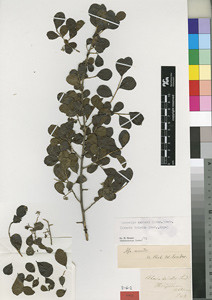
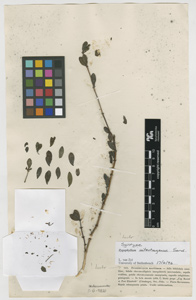 It is their collections together with the collections of the contemporary
  This years mountain-camp will be the perhaps most exiting area in Scandinavian caving right now, Burfjellet not far from Mo i Rana. It is an area known for many years, but it was not until the last few years that its potential became apparent! In 2006 the Polish cavers found a deep pitch, but lack of time forced them to turn at the top of pitch. Last year we returned for a 12 days stay on the mountain, and we manage making break-throughs in all three major caves (Edvardheimgrotta, Brattligrotta and Storligrotta), with the hundred meter deep pitch and waterfall in Edvardheimgrotta as the greatest discoveries.
  But we failed to connect the caves — so that remains to be done this summer! If you are interested in participating (first week of August), please feel free contact me, or check out the webpages of the
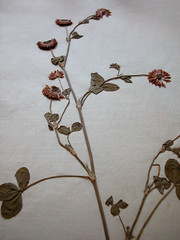 Det är de oväntade detektivarbetena som gör jobbet med
 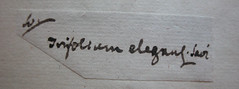 Det står inte heller var växten var insamlad, den enda ledtråden är det lilla “Prof. Savi misit” – “Professor Savi skickade mig den”. Eftersom han publicerade arten i Flora pisani, som är en förteckning över växter som växte i Provincia di Pisa (Italien) i slutet av 1700-talet, så kan man misstänka att den också är insamlad därifrån. I databasen har jag nu i alla fall angett Italien, Toscana, Provincia di Pisa som urpsrungsområde, om än med ett litet litet frågetecken. Namnet Trifolium elegens används för övrigt inte längre, utan arten har slagits ihop med samma art som vår alsikeklöver,
  BBC broadcasted